


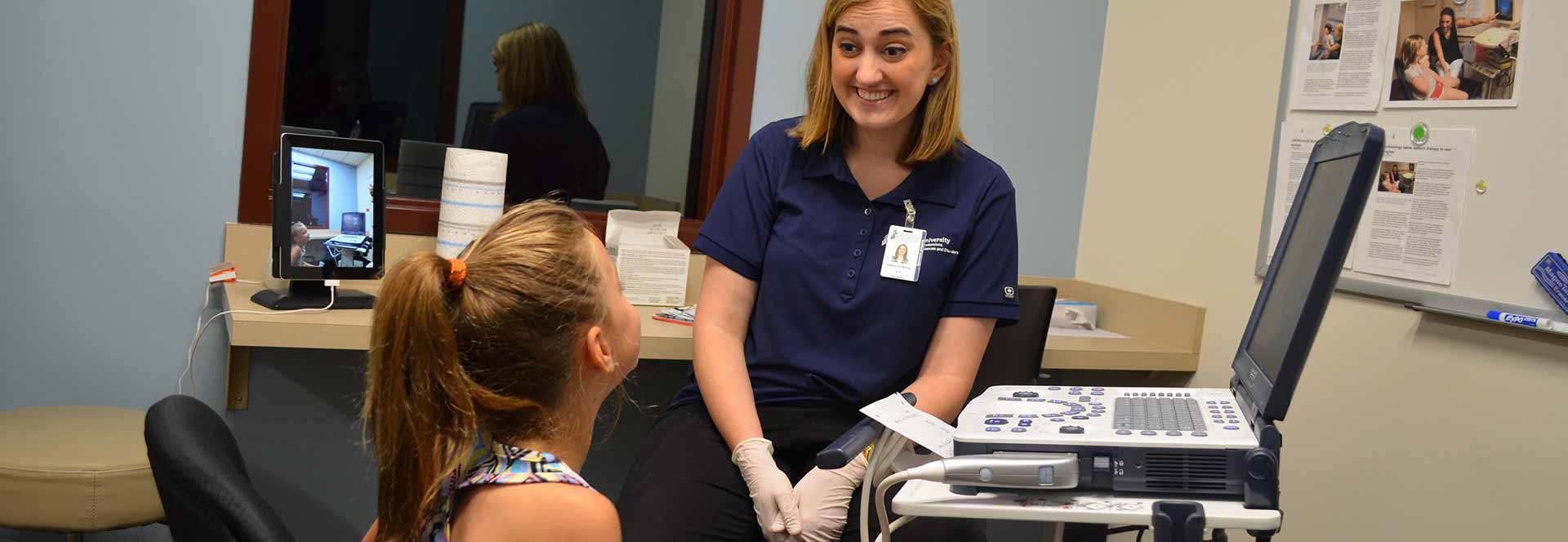
Vision
The vision of the Department of Communication Sciences and Disorders strongly supports Samford University’s mission and core values and the College of Health Sciences’ mission and values to nurture persons in their development of intellect, creativity, faith, and personhood as they are engaged in practice, leadership, scholarship, and service to the profession.
The department will incorporate academic and clinical education to provide students quality experiences that will challenge them to scientifically question and discover matters related to the field of speech-language pathology and audiology. Students will be prepared to combine the art and science of the professions for a diverse workplace environment and will hold to the highest of ethical standards when providing care for persons with varied communicative and swallowing disorders.
Mission
The mission of the Department of Communication Sciences and Disorders at Samford University is to prepare highly qualified speech-language pathologists through faith- based academic coursework and clinical placements designed to foster lifelong learning, attainment of personal career goals and high moral and ethical competency so that these practitioners will be of service to others in their community and throughout the world.
Strategic Focus Areas
- Academic Distinction/Future Ready Education
- Community Partnerships and Service
- Experiential Learning
- Alumni Relationships
- Student Mentorship
- Student Recruitment
Executive Summary
This Strategic Plan reflects the mission and vision of the Department of Communication Sciences and Disorders while aligning with the strategic priorities of the School of Health Professions and Samford University’s Fidelitas Priorities. It provides a framework for guiding the department's growth, advancing academic excellence, and strengthening our commitment to preparing compassionate, evidence-based speech-language pathologists. Through intentional planning and continuous assessment, the department will build on its existing strengths, respond to the evolving needs of the department and trends in the profession, and foster innovation in teaching, research, clinical practice, and service.
Goals and Objectives
Goal 1: Academic Distinction / Future-Ready Education
The CSDS Department will prepare students for responsible, ethical, and effective use of emerging technologies while sustaining an innovative, evidence-based curriculum that reflects the evolving needs of the profession. Fidelitas mapping: student engagement>
- Objective 1.1 Continuously evaluate and enhance the undergraduate and graduate curriculum to reflect emerging evidence and technologies, student feedback, accreditation standards, university assessment findings, and professional trends.
- Objective 1.2 Create guidelines for responsible AI use in coursework and clinical
education, ensuring students understand strengths, limitations, bias, and ethical
considerations. - Objective 1.3 Create opportunities for undergraduate and graduate students to
participate in research projects, demonstrating foundation competence in research design, data collection, and responsible conduct that are integrated with academic and clinical learning.
Goal 2: Community Partnerships and Service
The CSDS Department will strengthen and expand reciprocal partnerships with community preceptors and clinical sites to enhance student readiness, shared professional learning, and long-term collaboration. Fidelitas mapping: Community celebration, student engagement
- Objective 2.1 Build reciprocal learning communities with clinical partners through intentional engagement and shared professional development (i.e. journal club, CE spring event)
- Objective 2.2 Prepare students for off-campus clinical experiences by improving student self-efficacy through pre- and post-clinical readiness assessments.
- Objective 2.4 Offer meaningful public recognition for preceptors who demonstrate exemplary supervision and contribute significantly to the clinical education of Samford CSDS students.
Goal 3: Experiential Learning
The Department will expand experiential learning opportunities across undergraduate and graduate programs to promote professional growth, cultural competence, and engagement in evidence-based practice and service to others. Fidelitas mapping: Student engagement, global influence, community celebration
- Objective 3.1 Expand undergraduate experiential opportunities within the existing curriculum (research electives, instructional opportunities, labs, service activities).
- Objective 3.2 Create concentration-specific graduate opportunities through clinical, research, certification, and interprofessional experiences while leveraging faculty expertise.
- Objective 3.3 Develop a department study abroad opportunity to enhance global awareness and cultural competence.
- Objective 3.4 Increase participation in service activities to strengthen community engagement and experiential learning.
Goal 4: Alumni Relationships
The Department will strengthen meaningful and lifelong relationships with alumni to foster engagement, mentorship, philanthropy, and scholarship support. Fidelitas mapping: Community celebration, financial stewardship
- Objective 4.1 Expand and maintain an accurate alumni database to support
communication and engagement. - Objective 4.2 Develop a comprehensive alumni engagement plan with regular
communications and annual events. - Objective 4.3 Increase opportunities for alumni to mentor students, serve as guest
speakers, and participate in advisory activities. - Objective 4.4 Identify alumni donor prospects to support scholarships and departmental initiatives.
Goal 5: Student Mentorship
The Department will cultivate holistic mentorship that supports clinical readiness, academic growth, professional identity formation, and spiritual development. Fidelitas mapping: student engagement, faith formation
- Objective 5.1 Clearly define mentoring activities and milestones across the
undergraduate and graduate programs. - Objective 5.2 Integrate faith-informed mentorship practices that encourage spiritual growth, servant leadership, ethical decision-making, and compassionate care through intentional faculty and peer mentorship.
- Objective 5.3 Conduct pre- and post-program assessments to evaluate students' mentorship needs, experiences, and perceived benefits in clinical performance, academic development, faith formation, research engagement, and spiritual growth, using findings to continuously improve the mentorship model.
Goal 6: Student Recruitment
The Department will leverage innovative, AI and data-informed recruitment strategies while maintaining personalized engagement to attract and enroll students who demonstrate academic excellence, service orientation, and leadership potential.
Fidelitas mapping: student engagement
- Objective 6.1 Use AI and program data to identify recruitment trends, optimize outreach efforts, and support year-round recruitment activities for CSDS and MS SLP programs.
- Objective 6.2 Use predictive analytics to identify applicants who may be a strong fit for the undergraduate and graduate programs.
- Objective 6.3 Evaluate recruitment outcomes annually and refine strategies based on emerging data.
